Credit Cards
Why Paying Minimum Credit Card Dues Hurts You
V
Vikram Singh
Ex-Banker & Financial Analyst
Jan 24, 2026
8 min read
Share:
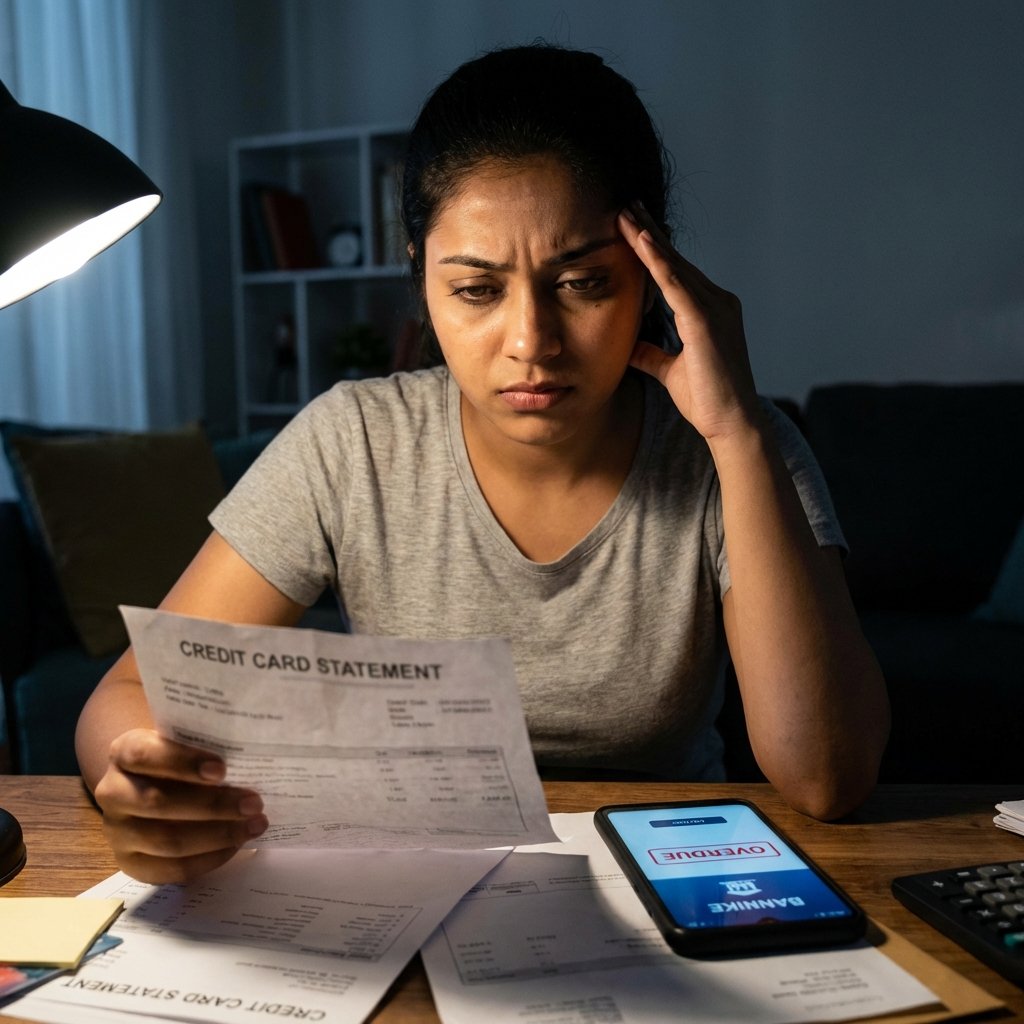
It happens every month. Your credit card bill arrives. You open it, your heart sinks a little at the total amount—maybe it is ₹45,000. But then, your eyes drift down to that smaller, friendlier number: **'Minimum Amount Due: ₹2,250'**. \n\nRelief washes over you. "I can pay that easily," you think. You click pay, the stress vanishes, and you get on with your life. \n\nBut here is the truth that banks won't tell you in bold letters: **You just walked into a trap.** \n\nPaying the minimum due is not a "convenience" feature; it is the single most profitable product for credit card companies and the most dangerous one for you. It is designed to keep you in debt for years—sometimes decades—while you pay back 3 or 4 times what you processed. \n\nIf you have ever wondered why your credit card balance never seems to go down even though you keep paying, this article is for you.
The 'Minimum Due' Illusion
Most people believe that paying the minimum due keeps them 'safe'. It doesn't. It only keeps the collection agents away.
What it Actually Covers
The Minimum Amount Due (MAD) is usually just 5% of your total outstanding balance. In many cases, this barely covers the interest charges for that month. You aren't paying off your debt; you are just renting it for another month.
The Interest Free Period Myth
Here is the shocker: The moment you pay only the minimum, you lose your 'interest-free period' (the 45-50 days grace period) instantly. Not just for the old balance, but for **every new purchase** you make. Bought a coffee the next day? Interest starts charging immediately.
The Math That Will Scare You
Let’s look at the numbers. Banks don't explain this clearly, but the math is brutal.
The 40% Interest Rate
Credit card interest is not 10-12% like a personal loan. It is typically 3.5% to 4% **per month**. That translates to 40% to 50% per year (APR). This is one of the most expensive forms of debt on the planet.
The Real-Life Example
Imagine you have a bill of ₹1 Lakh. You decide to pay only the 5% minimum (₹5,000) every month and stop using the card. Do you know how long it will take to clear the debt? **Over 11 years!** And you will end up paying nearly ₹2.5 Lakhs in interest alone on that ₹1 Lakh purchase.
The Double Whammy: GST and New Purchases
It gets worse. The government and the bank both take their cut.
18% GST on Interest
The interest charged by the bank is a 'service'. So, you pay 18% GST on that interest. This extra cost adds to your balance, earning interest on interest (compounding). It’s a snowball effect.
The Fresh Purchase Trap
Since your interest-free period is gone, every new swipe attracts interest from Day 1. If you buy groceries for ₹5,000, you aren't paying ₹5,000. You are paying ₹5,000 + 40% annualized interest until the entire previous bill is cleared.
What Has Changed? (The Credit Score Impact)
In the past, paying minimum due was seen as 'okay' behavior. In 2026, credit algorithms are smarter.
High Credit Utilization
If you only pay the minimum, your outstanding balance stays high. This keeps your 'Credit Utilization Ratio' high (e.g., using 90% of your limit). This single factor can drag your CIBIL score down by 30-50 points.
The 'Revolver' Tag
Banks classify customers who pay minimum due as 'Revolvers'. unique paradox: Banks love you because you are profitable, BUT they might hesitate to give you a home loan or car loan because you look 'credit hungry' and financially stretched.
When Is It Okay to Pay Minimum Due?
There is only one scenario where this is acceptable.
Emergency Cash Flow Crisis
If you lost your job or faced a medical emergency and literally have zero cash, pay the minimum. Why? Because it prevents 'Late Payment Fees' and stops the bank from reporting a 'Default' to CIBIL. It saves your score from being destroyed, even if it costs you interest.
How to Escape the Trap
If you are stuck in this cycle, here is your exit plan.
1. Stop Using the Card
This is non-negotiable. Stop adding new debt. Switch to debit card or UPI until the balance is zero.
2. Convert to EMI
Call your bank. Ask them to convert the outstanding balance into a Personal Loan or EMI plan. The interest rate will drop from 40% to 15-18%. This instantly stops the bleeding.
3. The 'Avalanche' Method
If you have savings, pay off this debt first. Returns from FD (7%) or Stocks (12%) can never beat Credit Card Interest (40%). Paying this off is the best investment you can make.
Official Resources & Trust Signals
Verify your rights and rules here:
RBI Master Direction on Credit Cards
Understand the official rules on interest calculations and penalties: RBI Official Website.
National Consumer Helpline
If you feel you are being charged hidden fees unfairly, report it: Consumer Helpline Portal.
Frequently Asked Questions
Does paying only minimum due affect my CIBIL score?
Technically, no—it is counted as 'On-Time Payment' so your payment history is safe. However, it keeps your Credit Utilization high, which creates a negative impact on your score over time.
How is credit card interest calculated?
It is calculated on your average daily balance. The rate is usually 3-4% per month (36-48% annually). GST of 18% is added on top of the interest amount.
Can I convert my credit card bill into EMI?
Yes. Most banks allow you to convert outstanding balances above ₹2,500 into EMIs of 6, 12, or 24 months. The interest rate for EMIs (13-18%) is much lower than the revolving credit rate (40%).
What happens if I miss the minimum due payment?
You will be charged a Late Payment Fee (₹500-₹1,300), your interest-free period is revoked, and the missed payment is reported to CIBIL, which drastically lowers your credit score.
Conclusion
Paying the minimum due is an easy habit to fall into, but a hard one to break. It trades a moment of relief today for years of financial stress tomorrow. \n\nThe bank sends you that 'Minimum Due' SMS not because they are your friend, but because it is their business model. Don't fall for it. Treat your credit card like a debit card—if you can't afford to pay the full bill at the end of the month, you can't afford the purchase. \n\nClear your dues, reclaim your interest-free period, and use the card for its real benefits—rewards and convenience—not as a trap for expensive debt.